


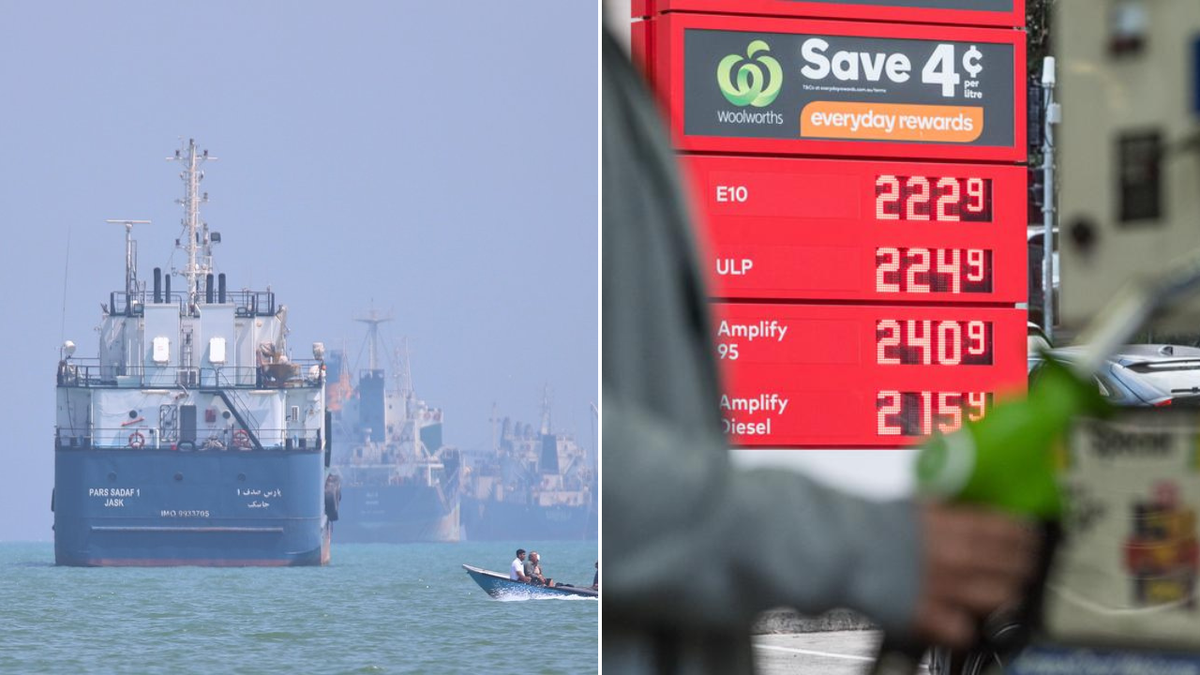

The war between the United States and Iran may be winding down, but motorists and businesses could be facing oil price volatility for another 18 months.
The United States and Iran agreed to a peace deal on Monday to end the war in the Middle East, with an official signing ceremony scheduled for Friday.
WATCH THE VIDEO ABOVE: US-Iran peace deal to end war and reopen oil passage
Know the news with the 7NEWS app: Download today
US President Donald Trump has said the US will lift its blockade on the Strait of Hormuz, and oil will start flowing again, but one defence expert has warned this could take quite some time to be felt.
Defence expert John Blackburn, chair of the Institute for Integrated Economic Research Australia, told Sunrise on Tuesday that high prices and supply disruption could take between 12 to 18 months to stabilise.
He noted that while the Strait of Hormuz may formally be opened on Friday, it could take anywhere from one to three months to get ships flowing back through the crucial waterway.
“It’ll take anywhere from one to three months to get the strait open again, to get rid of the mines in there, to make sure that things are safe to move, that the insurance companies can move on it,” Blackburn said.
From there, refineries will need to reconfigure themselves, with some having been blown up or damaged during the war.
This process, he explained, could take a further six to nine months.
With countries wanting to restock their strategic reserves, many of which have been all but exhausted during the conflict, demand is likely going to be even higher than before the war.
“We’re not going back to what was the normal demand before the war. It’s going to be higher,” Blackburn said.
“So we’re facing a disruption, I’d say, for at least the next 12 or 18 months, where you’re going to have pricing problems.”
Oil prices peaked at around $120 a barrel and are now sitting at around the $80 mark after a $5 drop following Monday’s peace deal announcement.
Blackburn told Sunrise he expects those prices to rise again as demand increases and emergency stock releases cease.
“As you try to restart the system, and you don’t have those emergency stocks going in anymore, I think the price will go up because there’s going to be a greater demand for it. And demand sets the price,” he said.


